Recycling and Sustainability — Gardening West Ham
 Gardening West Ham is committed to building an eco-friendly waste disposal area and a thriving sustainable rubbish gardening area across West Ham and neighbouring boroughs. Our approach blends practical on-site recycling, community partnerships and a clear target-driven plan so that garden waste, soil and recyclable materials are handled responsibly. We prioritise low-carbon logistics, circular reuse of green materials and alignment with borough waste separation schemes to reduce landfill and lower emissions.
Our recycling percentage target
We have set a measurable recycling percentage target to drive continuous improvement: 60% diversion of garden and mixed recycling from landfill within five years. That target covers green waste, compostable food residues from communal gardens, wood and timber suitable for chipping, and dry recyclable packaging collected during site clearances. To reach this goal we use clear on-site segregation and regular performance reviews with partners and operatives. Key actions include:- Separate containers for garden waste, mixed recycling and residual waste at every job.
- Mandatory composting where safe and practicable; on-site or at partner composting hubs.
- Monthly reporting on tonnage diverted and percentage recycled to track progress.
Boroughs' approach to waste separation
We align our procedures with the waste separation approaches used across Newham and surrounding boroughs: green/food caddies, mixed recycling (paper, tins, plastics), and residual waste streams. By mirroring local council systems we make it straightforward for residents and community gardens to continue good separation practices after we've finished work. Consistency with borough collections increases capture rates and reduces contamination, helping meet local recycling ambitions.Local transfer stations are a vital part of our chain for an eco waste disposal area. We use permitted borough transfer facilities and authorised waste transfer sites serving East London to consolidate loads, send green waste to mechanical-biological treatment or commercial composting, and route recyclable materials to licensed processors. Using nearby transfer stations reduces haulage miles and time on the road — an important element of our low-carbon planning. We always document transfer notes and ensure materials are traceable to lawful destinations.
 Charity and social enterprise partnerships are central to our reuse-first strategy. We work with local community groups, food redistribution charities, and re-use organisations to maximise the life of materials removed from gardens. Examples of partnership activity include:
- Donating intact planting pots, timber offcuts and clean soil to community gardens and allotment projects.
- Working with social enterprises that refurbish tools and equipment for volunteer-led green spaces.
- Coordinating safe transfers of surplus compost or mulch to neighbourhood green projects.
These partnerships create social value, divert useful goods from waste streams, and support a circular approach to gardening materials. We prioritise charities and non-profits that operate within West Ham and neighbouring boroughs to keep resources local and community benefit high.
Low-carbon vans and sustainable transport are non-negotiable for an effective eco-friendly waste disposal area. Gardening West Ham is progressively electrifying its fleet and introducing hybrid and battery-powered vans for smaller loads, plus cargo bikes for short-distance collections in dense neighbourhoods. Our transport strategy includes route optimisation software, consolidated pick-ups at transfer points, and weight-conscious loading to reduce trips. We also trial low-emission trailers and train crews in efficient driving to cut fuel use and emissions.
Sustainable rubbish gardening area practices
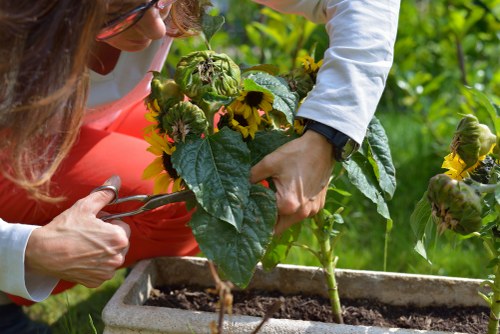
Practical techniques on site increase material recovery: chipping woody waste to produce mulch, on-site or partnered composting of green matter, reusing reclaimed soil where safe, and separating hazardous garden chemicals for specialist disposal. Mulch and woodchip produced from prunings are reused across projects, improving soil health and avoiding purchase of virgin materials. Where contamination or disease is suspected, materials are removed under strict controls to prevent spread.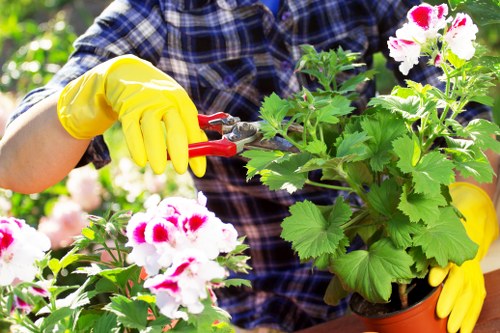
Monitoring, transparency and community engagement
We publish regular reports on tonnage handled, recycling rates and progress toward the 60% recycling target. Transparency builds trust: our site managers keep records of material flows, transfer station receipts, and charity handovers. Community engagement is ongoing — residents and volunteer groups are invited to information sessions explaining the benefits of proper sorting, the role of local transfer stations, and how to use communal recycling points. Education and simple on-site signage significantly reduce contamination and increase capture rates.In addition to operational steps, Gardening West Ham develops site-specific plans for a greener future. We identify opportunities for reuse at the start of every project, prioritise materials that can be redirected to local reuse partners, and minimise the need for new materials by advocating for reclaimed timber, second-hand planters and community tool-sharing. Our approach to a sustainable rubbish gardening area is practical and replicable across borough approaches to waste separation.
Compliance, safety and lawful disposal underpin everything we do. Materials that cannot be recycled are treated according to regulatory requirements and sent to licensed processors via local transfer stations. We record all movements and maintain partnerships with accredited facilities to ensure that nothing is disposed of illegally. This governance supports our recycling percentage target and demonstrates our commitment to responsible stewardship of garden waste.
Gardening West Ham’s vision for an eco-friendly waste disposal area and sustainable rubbish gardening area is ambitious but achievable: a combination of clear targets, local transfer station use, charity partnerships, and low-carbon vehicles. Together with residents and community partners, we are turning garden waste into resources — compost, mulch, reclaimed timber and social benefit — while cutting carbon and keeping our streets and green spaces healthy.